
Dog Allergies, Yeast & Immune Imbalance
What’s really causing the flare-ups and how to fix it
If your dog is constantly dealing with itching, red paws, a yeasty smell, ear build-up, or recurring flare-ups, you are likely not dealing with a simple allergy issue.
What you are seeing is often a deeper problem driven by immune imbalance and poor gut health.
🌿 The Gut-Skin Axis Explained
Your dog’s gut and skin are closely connected through what is known as the gut-skin axis.
When the gut is functioning well, nutrients are absorbed properly, the immune system remains balanced, and the skin barrier stays strong. In this state, your dog is far less likely to react to environmental or dietary triggers.
When the gut becomes disrupted, inflammation increases and the immune system begins to overreact. This is when the skin becomes sensitive, reactive, and prone to ongoing issues such as itching, redness, and infections.
⚠️ Leaky Gut: The Missing Piece
Many chronic allergy cases involve a condition known as leaky gut.
This occurs when the gut lining becomes compromised and allows unwanted particles to pass into the bloodstream. The immune system responds to these particles as threats, which drives ongoing inflammation and hypersensitivity.
Over time, this can show up as food sensitivities, skin flare-ups, and persistent immune dysfunction. What appears to be a surface-level skin issue is often rooted in internal imbalance.
🔁 Why Treatments Don’t Always Last
Many dogs are placed on medications, injections, or medicated shampoos as a first line of treatment. These approaches can provide fast and necessary relief, especially during severe flare-ups.
Medications such as antihistamines and steroids work by suppressing inflammation and reducing itch signals. Injections are designed to interrupt the itch cycle and can provide temporary relief over several weeks. Medicated shampoos help manage bacteria and yeast on the skin’s surface.
The limitation is that these approaches do not address gut health or restore immune balance. Once the treatment is reduced or stopped, symptoms often return because the underlying cause is still present.
🚨 The Flare-Up Cycle
This leads to a pattern many pet parents recognise. Symptoms appear, treatment begins, and the condition improves. Once the treatment stops, the symptoms return, often with the same intensity or worse.
This cycle continues because the internal drivers of inflammation and immune imbalance have not been resolved.
⚠️ Antibiotics and Steroids: Hidden Setbacks
Antibiotics and steroids are often prescribed with the goal of controlling infection and inflammation. While they can be helpful in acute situations, they can also create longer-term challenges if relied on repeatedly.
Antibiotics do not discriminate between harmful and beneficial bacteria. This means they can disrupt the gut microbiome, reducing the population of beneficial bacteria that support digestion and immune function. This imbalance can create an environment where yeast is more likely to thrive.
Steroids suppress the immune response, which can reduce visible symptoms quickly. The trade-off is that they do not correct the underlying imbalance and may weaken natural immune regulation over time.
🍞 Yeast Overgrowth: Why It Keeps Returning
Yeast is naturally present on your dog’s skin and within the gut. It becomes problematic when the internal environment shifts in its favour.
This shift is often driven by poor gut health, highly processed diets, repeated antibiotic use, and moist environments such as paws, ears, and skin folds.
When yeast overgrowth occurs, you may notice a musty odour, brown staining on the paws, greasy or inflamed skin, and persistent licking or chewing. Unless the internal imbalance is addressed, these symptoms tend to return even after treatment.
🧪 The Real Solution: Support From Inside and Out
Lasting improvement requires a more complete approach. Instead of focusing only on surface symptoms, you need to support the gut, regulate the immune system, reduce inflammation, and manage the skin externally at the same time.
🥩 Rebuilding Gut Health
Everything starts with what goes into your dog’s bowl.
The Gut Guardian Meal Enhancer is designed to support the repair of the gut lining, improve digestion, and restore balance within the microbiome. This is particularly important for dogs showing signs of sensitivity, ongoing inflammation, or inconsistent stools.
Alongside this, the Allergy Balance Meal Enhancer focuses on regulating the immune response and supporting a more balanced reaction to environmental and dietary triggers. It is well suited to dogs experiencing ongoing itching, seasonal reactions, or repeated flare-ups.
🐾 Supporting the Skin and Managing Yeast
While internal support addresses the root cause, topical care plays an important role in reducing discomfort and preventing further irritation.
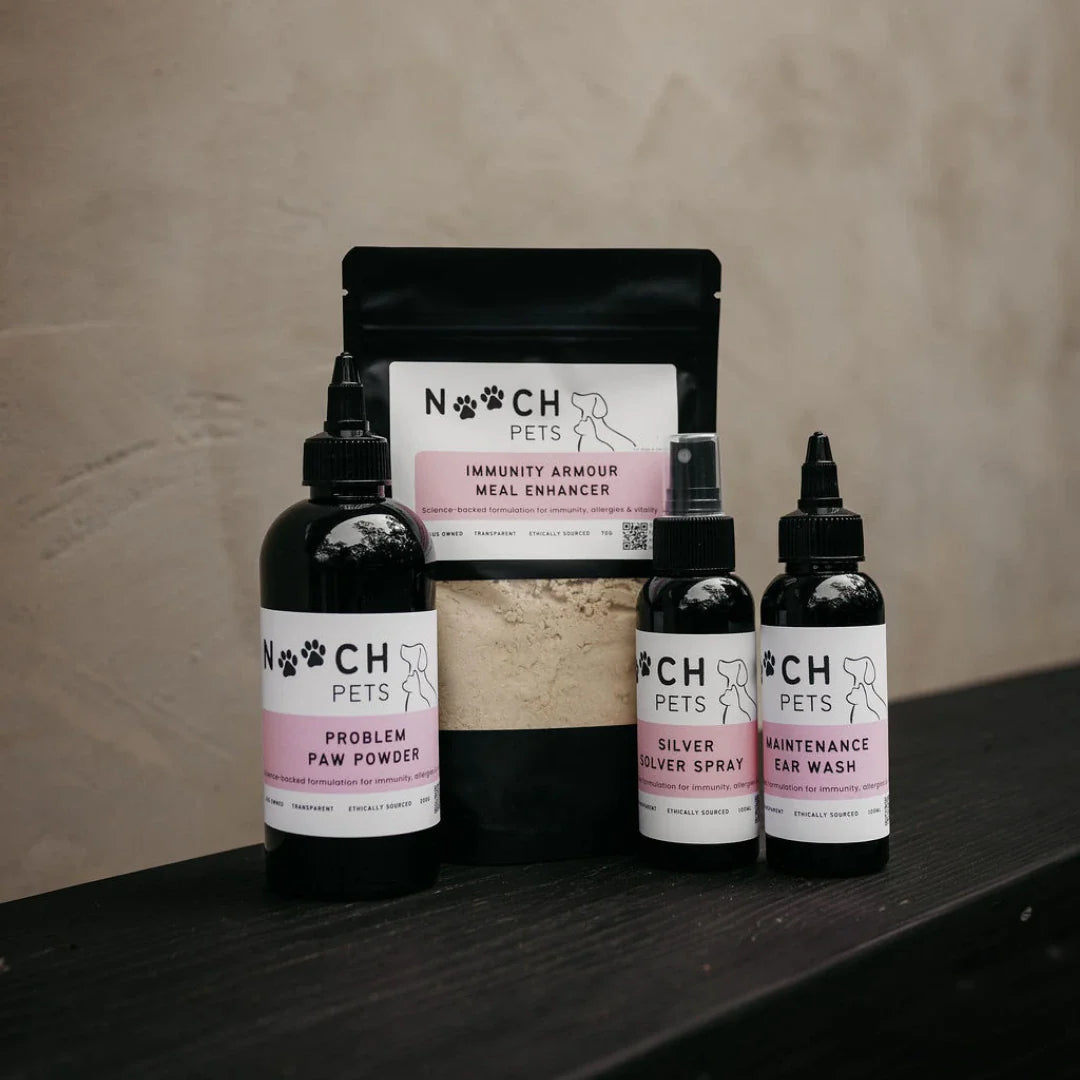
The Problem Paw Powder helps keep paws dry and creates an environment that is less favourable for yeast growth. This is especially useful for dogs that constantly lick their feet or spend time in damp conditions.
The Silver Solver provides targeted support for irritated skin, including rashes, hot spots, and areas affected by yeast or bacterial imbalance. It works to calm inflammation while supporting the skin’s natural healing process.
For ear care, the Maintenance Ear Wash offers a gentle, alcohol-free solution made with apple cider vinegar and glycerin. It helps remove build-up, maintain a balanced ear environment, and reduce the likelihood of yeast overgrowth.
🔄 Consistency Is What Creates Change
One of the most common reasons for recurring issues is stopping treatment too early. Symptom relief can happen quickly, but true repair takes time.
Consistent support allows the gut to rebuild, the immune system to stabilise, and the skin to become more resilient. This is what reduces the frequency and severity of future flare-ups.
🧠 What This Means for Your Dog
If your dog is struggling with allergies or yeast, it is important to recognise that this is not just a surface-level problem. It is a sign of internal imbalance, most commonly involving the gut and immune system.
Short-term treatments can be helpful when your dog is uncomfortable, but long-term improvement comes from addressing the root cause.
❤️ Final Thought
Your dog’s symptoms are not random. They are signals.
When you shift your focus from suppressing symptoms to supporting the body, you create the conditions for real, lasting change.
The goal is not just relief.
The goal is balance, resilience, and long-term health.


