
Gut Health for Dogs: The Complete Guide to Digestion, Fresh Feeding, and Fibre
Here’s a more science-driven version, with a mix of paragraphs and structured points, and a deeper breakdown of Gut Guardian.
Gut Health for Pets: A Practical, Science-Backed Approach
Gut health is not a trend.
It is one of the core systems that determines how your pet feels, functions, and ages.
Around 70 to 80 percent of your pet’s immune system sits in the gut.
This means every meal either supports health or adds stress.
When the gut microbiome becomes imbalanced, you start to see:
-
Chronic itching
-
Ear infections
-
Loose or inconsistent stools
-
Scooting and anal gland issues
-
Low energy or behavioural changes
These are not isolated problems.
They are signals.
The Gut Microbiome: What’s Actually Happening
Your pet’s gut contains trillions of microorganisms.
This includes beneficial bacteria, opportunistic bacteria, and pathogens.
In a healthy gut:
-
Beneficial bacteria dominate
-
The gut lining stays intact
-
Nutrients absorb efficiently
-
The immune system stays regulated
When disrupted, you get:
-
Dysbiosis (microbial imbalance)
-
Increased gut permeability
-
Inflammation
-
Poor nutrient absorption
This is where a structured approach matters.
Stage 1: Diet – Remove the Inputs Driving Inflammation
You cannot restore balance while feeding the problem.
Highly processed diets and synthetic additives can:
-
Alter microbiome diversity
-
Irritate the gut lining
-
Increase inflammatory responses
-
Reduce digestive efficiency
Common disruptors include:
-
Artificial preservatives and colours
-
Synthetic vitamin packs sprayed onto kibble
-
Low-quality protein sources
-
High-heat processing
What supports the gut instead:
-
Whole food ingredients
-
Bioavailable nutrients
-
Moisture-rich diets
-
Reduced chemical load
Even partial upgrades in diet can shift the microbiome within days.
Ask yourself:
Are you feeding nutrients, or just meeting calorie requirements?
Stage 2: Fibre – Regulate, Clean, and Support
Fibre is often misunderstood.
It is not just “bulk”.
It is a functional tool that directly influences gut health.
There are two key types:
-
Soluble fibre
-
Insoluble fibre
Each plays a different role.
Soluble fibre:
-
Ferments in the gut
-
Feeds beneficial bacteria
-
Produces short-chain fatty acids like butyrate
-
Supports gut lining repair
Insoluble fibre:
-
Adds stool bulk
-
Speeds up transit time
-
Supports natural anal gland expression
This is why fibre is critical for dogs that scoot.
Without proper stool formation, anal glands do not empty effectively.
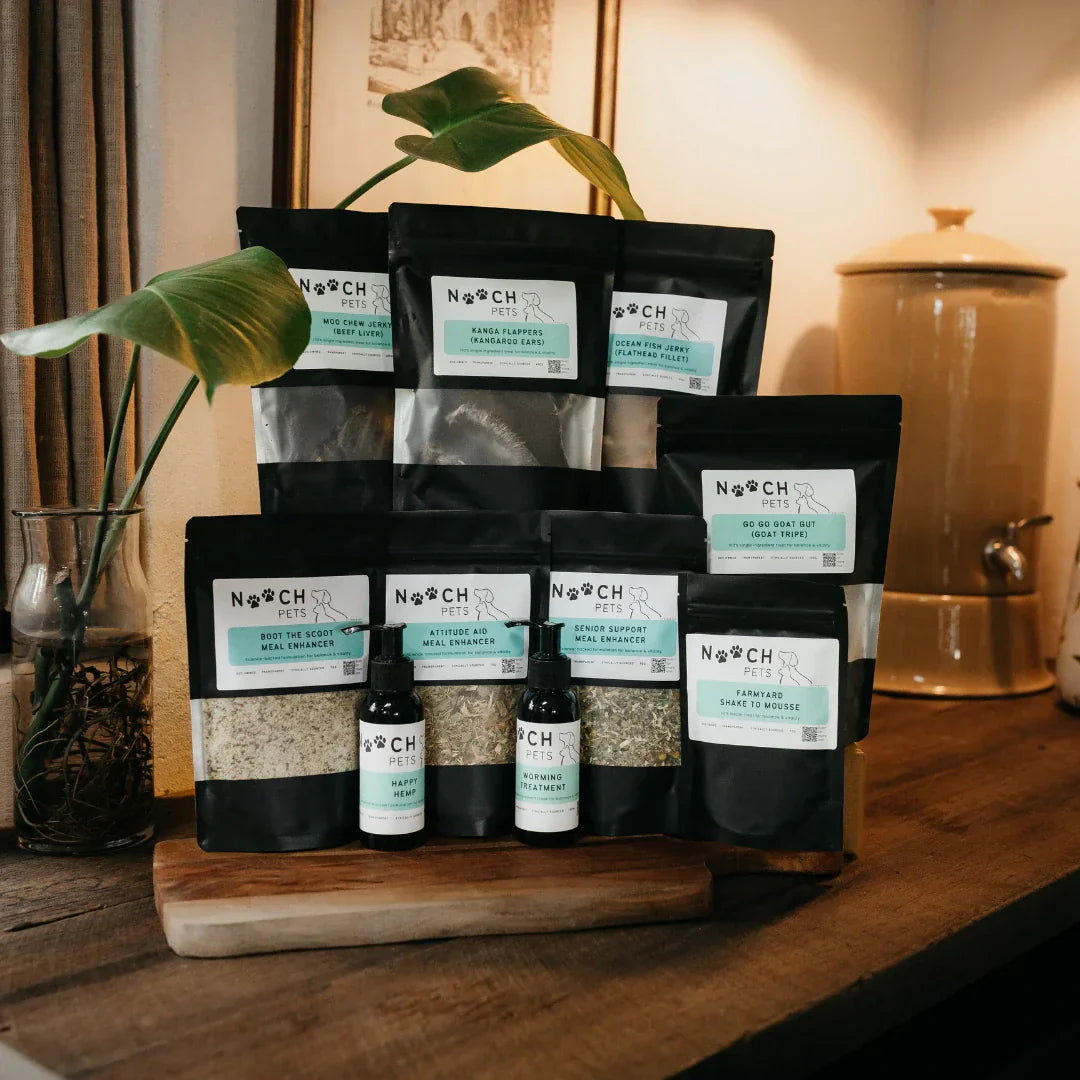
Our Boot The Scoot Meal Enhancer is the perfect combination of soluble and insoluble fibre.
Key outcomes of correct fibre intake:
-
Firmer, consistent stools
-
Reduced scooting
-
Lower toxin build-up
-
Improved microbiome diversity
This stage prepares the gut for rebuilding.
Stage 3: Probiotics – Restore and Rebuild
Once you reduce irritation and improve stool quality, you can introduce probiotics effectively.
Probiotics are live microorganisms that:
-
Compete with harmful bacteria
-
Support digestion
-
Produce beneficial compounds
-
Regulate immune responses
But results depend on:
-
Strain selection
-
Dose
-
Survivability through digestion
-
The environment they enter
If the gut environment is poor, probiotics struggle to colonise.
That is why stages 1 and 2 matter.
Gut Guardian Meal Enhancer: Why It Works Differently
Most gut supplements focus on one piece of the puzzle.
Gut Guardian was designed to support the entire system.
Not just add bacteria, but create conditions for real change.
What makes it effective:
-
Combines probiotics with functional nutrients
-
Supports both microbiome balance and gut lining health
-
Designed for daily use, not short-term fixes
-
Easy integration into any diet
What it is doing inside your pet:
-
Introducing beneficial bacterial strains
-
Supporting production of short-chain fatty acids
-
Reinforcing the gut barrier
-
Improving nutrient absorption
-
Reducing inflammatory load
This is where restoration begins.
More Than a Probiotic
Gut Guardian is not just about adding “good bacteria”.
It works across multiple layers:
1. Microbial balance
Helps shift the ratio toward beneficial bacteria.
2. Gut lining support
Encourages repair of the intestinal barrier, which helps reduce sensitivity and inflammation.
3. Digestive efficiency
Supports enzyme activity and nutrient uptake.
4. Immune regulation
A balanced gut reduces overreactions like itching and allergies.
Why Most Gut Supplements Fall Short
Many products:
-
Use low-dose or unstable probiotic strains
-
Ignore fibre and gut environment
-
Focus on short-term symptom relief
This leads to inconsistent results.
Gut health is not one-dimensional.
It requires:
-
Removal of stressors
-
Functional support
-
Microbial rebuilding
Gut Guardian was built with this full picture in mind.
What You Can Expect When the Gut Improves
Changes often show up in practical ways:
-
Stool becomes firm and consistent
-
Scooting reduces or stops
-
Skin irritation decreases
-
Coat quality improves
-
Energy stabilises
These are not random improvements.
They reflect a more stable internal system.
Where to Start
Keep it simple and consistent:
-
Review your pet’s current diet
-
Add functional fibre support
-
Introduce Gut Guardian daily
Then observe closely.
Small, consistent changes outperform quick fixes.
Final Thought
Gut health is not something you fix once.
It is something you support daily.
So the better question is:
Are you giving your pet the conditions to thrive, or just reacting when things go wrong?


